
Ever felt the sting of a losing streak at the blackjack table? The frustration of making what seemed like the right decision, only to watch the dealer pull a winning hand out of nowhere? Blackjack, at first glance, might seem like a game of pure chance, but beneath the surface lies a world of strategy waiting to be unlocked.
Basic strategy is a cornerstone of skillful blackjack play. It’s not about guaranteeing a win every time – no strategy can promise that. Instead, it’s a mathematically sound approach that drastically reduces the house edge, tipping the odds ever so slightly in your favor over the long run. Think of it as the foundational skill upon which all serious blackjack players build their game.
With a solid understanding of basic strategy, you’ll be equipped to make smarter decisions at the table,transforming those moments of frustration into opportunities for calculated gains. Get ready to take control of your game and improve your chances of winning in the exciting world of blackjack.
Understanding Blackjack Basics
Blackjack is a popular card game where players aim to have a hand value closer to 21 than the dealer, without exceeding 21. Understanding the basic rules is crucial for any player, whether a beginner or a seasoned gambler. Here’s a breakdown of the core elements:
- Card Values: Numbered cards (2-10) are worth their face value. Face cards (Jack, Queen, King) are each worth 10. An Ace can be worth either 1 or 11, depending on which value benefits the hand more.
- Hit: To “hit” means to ask for another card. Players typically hit when their hand value is low and they want to get closer to 21. For example, if you have a hand totaling 12, hitting might be a good option to improve your total.
- Stand: To “stand” means to stop taking cards. Players usually stand when they have a hand value they’re comfortable with, and they don’t want to risk going over 21. A hand of 18 is a common reason for a player to stand.
- Double Down: Doubling down allows a player to double their initial bet in exchange for receiving only one more card. This is often done when a player has a strong starting hand, like a hard 11, giving them a good chance of getting a high total.
- Split Pairs: If a player is dealt a pair (two cards of the same rank), they can choose to split the pair into two separate hands. Each hand then receives another card, and the player plays each hand independently. Splitting is commonly used with Aces or eights.
- Insurance: If the dealer’s upcard is an Ace, players are offered “insurance,” which is a side bet that the dealer has blackjack (a hand totaling 21). If the dealer does have blackjack, the insurance bet pays out, mitigating some of the loss from the main bet.
Blackjack Terminology
Familiarizing yourself with common blackjack terms will enhance your understanding and enjoyment of the game:
- Hard Hand: A hand that either doesn’t contain an Ace, or where the Ace is counted as 1. For example, a hand of 10 and 8 is a hard 18 because there is no Ace present. A hand of Ace, 7 and 10 is also a hard hand, because the Ace has to be counted as 1 to avoid busting.
- Soft Hand: A hand that contains an Ace counted as 11. For example, an Ace and a 6 is a soft 17. The benefit of a soft hand is that you can hit without the risk of immediately busting, as the Ace can be counted as 1 if needed.
- Push: A “push” occurs when the player and the dealer have the same hand value. In this case, the player’s bet is returned, and no one wins.
- Bust: To “bust” means to exceed a hand value of 21. If a player or the dealer busts, they automatically lose the hand.
Decoding the Basic Strategy Chart
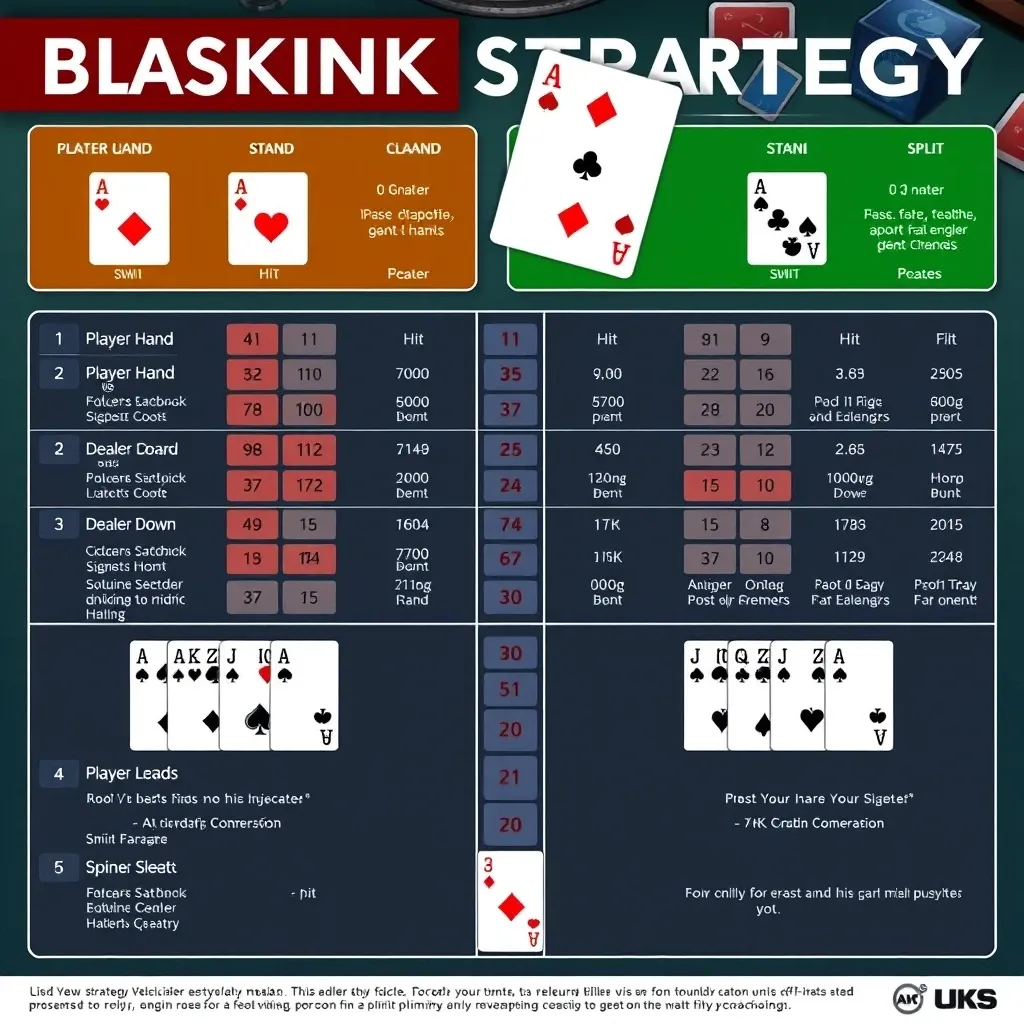
The basic strategy chart is a cornerstone for blackjack players aiming to reduce the house edge. It provides mathematically optimal actions for every possible player hand against each dealer upcard. Mastering this chart is crucial for making informed decisions at the table and improving your odds of winning.
To use the basic strategy chart effectively, you need to understand how to read it. The chart is essentially a matrix where your hand intersects with the dealer’s. By locating the correct intersection, you’ll discover the recommended action: Hit, Stand, Double Down, Split, or Surrender. The strategy is derived from extensive computer simulations, showing the best long-term play for each scenario.
Understanding the Chart’s Axes
The basic strategy chart is organized with two axes: one representing the player’s hand and the other representing the dealer’s upcard. The rows of the chart list the various possible player hands you might be dealt. These include hard totals (hands without an Ace counted as 11), soft totals (hands with an Ace counted as 11), and pairs. The columns across the top of the chart show the dealer’s upcard, ranging from 2 through Ace.
To find the correct action, locate your hand on the left-hand side of the chart. For example, if you have a 16, find the row labeled ’16’. Then, identify the dealer’s upcard along the top. Let’s say the dealer is showing a 7. Follow the ’16’ row across until it intersects with the ‘7’ column. The cell at this intersection will tell you the optimal action to take based on mathematical probabilities.
Key Situations Explained: Hard Hands, Soft Hands, Pairs
Blackjack isn’t just about getting to 21; it’s about making the smartest play in every situation. Understanding how to navigate hard hands, soft hands, and pairs is crucial for maximizing your odds at the table. The following sections break down the basic strategy for each of these scenarios, offering insights into why certain plays are recommended.
Playing Hard Hands
Hard hands are hands that either don’t contain an Ace, or contain an Ace that counts as 1 (because counting it as 11 would bust the hand). The strategy for hard hands revolves around balancing the risk of busting with the need to improve your hand.
One of the most difficult situations is facing a dealer’s strong upcard (7-Ace) with a hard 12-16. Basic strategy often dictates hitting in these scenarios, even though it feels risky. For example, if you have a hard 16 against a dealer’s 10, the mathematically correct play is to hit. This is because the dealer has a high probability of making a strong hand, and standing on 16 gives you little chance of winning. While hitting might lead to a bust, it is statistically better than the near-certain loss of standing.
Conversely, against a dealer’s weak upcard (2-6), the goal is to let the dealer bust. This often means standing on relatively low totals like 12 or 13. Doubling down is also beneficial when you have a hard 10 or 11 against a dealer’s lower cards, as you have a good chance of making a strong hand.
Navigating Soft Hands
Soft hands contain an Ace that can be counted as either 1 or 11. This flexibility allows for more aggressive plays. The key with soft hands is to maximize your potential when the dealer shows weakness.
Doubling down is often the correct play with soft hands, especially when you have a soft 17 or 18 (Ace-6 or Ace-7) against a dealer’s weaker cards (2-6). For example, with a soft 18 against a dealer’s 5, doubling gives you the best chance of winning, as you can improve your hand without the risk of busting. Hitting is generally recommended for lower soft totals (soft 13-16) against most dealer upcards, as you need to improve your hand.
The Art of Splitting Pairs
Splitting pairs can be a powerful tool to win more at the table, but it’s essential to know when to do it. The general rule is to split when you have a good chance of making two strong hands out of one weaker hand.
Always split Aces and 8s, no exceptions. Splitting Aces gives you two chances to hit blackjack, significantly increasing your payout potential. Splitting 8s is crucial because a total of 16 is one of the worst hands in blackjack. By splitting, you avoid being stuck with that total and have two opportunities to make a much better hand. Other pairs, like 2s, 3s, 6s, 7s, and 9s, should be split in certain situations, usually against dealers’ weak upcards. Never split 5s or 10s.
Common Mistakes to Avoid
Even with a basic strategy chart in hand, many blackjack players stumble into common pitfalls that erode their chances of winning. The most frequent blackjack mistake is letting emotions dictate decisions. Gut feelings and hunches are unreliable in a game of probability. Sticking rigidly to the basic strategy chart, irrespective of how the game “feels,” is crucial.
Another error involves misinterpreting or misremembering the chart itself. It’s easy to glance at the wrong cell or confuse similar situations, leading to suboptimal plays. Players might also deviate from basic strategy when faced with pressure from other players or the dealer, second-guessing their decisions. Don’t. Basic strategy is mathematically sound and designed to minimize the house edge. Straying from it, regardless of the reason, inevitably increases the risk of losses. Avoid these errors, and adhere to a disciplined approach to maximize your blackjack odds.
Practicing and Mastering Basic Strategy
Blackjack’s basic strategy isn’t some mystical secret; it’s a mathematically sound set of rules that dictates the optimal play for every possible hand you can be dealt. But knowing it in theory and applying it under the pressure of a real casino are two entirely different beasts. The key to unlocking its power lies in diligent practice and unwavering consistency.
So, how do you go from novice to ninja with the basic strategy chart? First, you need to commit it to memory. Flashcards are your friend here. Create a set with every possible player hand versus dealer upcard combination. Quiz yourself relentlessly until those optimal plays become second nature. Online blackjack trainers are another fantastic resource. Many offer interactive drills and simulations that track your accuracy and highlight areas where you need improvement. Mnemonics also can be helpful. Create a catchy phrase or image to associate with certain plays.
Once you’ve got the chart down, it’s time to put it to the test. But don’t jump straight into the high-roller room just yet. Start with online blackjack or low-stakes games. The goal is to get comfortable making decisions quickly and confidently without having to constantly refer back to the chart. Remember, basic strategy is a long-term game. There will be times when it feels like it’s not working, but stick with it. Over time, it will significantly improve your odds and turn you into a more profitable player.

Basic Strategy Variations and Adjustments
Basic strategy provides a mathematically optimal way to play each hand in blackjack, but its effectiveness hinges on adhering to a specific set of rules. Blackjack isn’t a one-size-fits-all game; casinos introduce rule variations that subtly—or not so subtly—alter the house edge. To truly master basic strategy, being aware of these variations and making the necessary adjustments is critical.
One of the most significant rule differences is whether the dealer hits or stands on a “soft 17.” A soft 17 is an ace counted as 11, along with a six. If the dealer hits a soft 17, it generally favors the house, requiring you to play more aggressively. Conversely, if the dealer stands on all 17s, the player has a slight advantage, and the basic strategy shifts towards a more conservative approach.
The payout for blackjack itself is another crucial factor. Standard blackjack pays 3:2, meaning a $10 bet wins $15. However, some casinos offer 6:5 blackjack, where the same $10 bet only wins $12. This seemingly small change dramatically increases the house edge, making basic strategy less effective. In fact, the 6:5 payout is so unfavorable that some experts advise avoiding these tables altogether.
Because of these blackjack rule variations, relying solely on a generic basic strategy chart can sometimes be a mistake. Numerous resources provide charts tailored to specific rule sets. Players should always take a moment to find and utilize a chart that matches the specific rules of the casino where you are playing, and it’s always recommended to confirm the local rules before playing, ensuring that every decision maximizes the odds of winning.
Beyond Basic Strategy: What’s Next?
Once you’ve mastered basic blackjack strategy, you might wonder about taking your game to the next level. Some players explore advanced blackjack skills like card counting. This involves tracking the ratio of high to low cards remaining in the deck to estimate when the odds are in your favor.
Keep in mind that card counting is not illegal, but casinos generally frown upon it. If a casino suspects you of counting cards, they may ask you to stop playing. Successfully employing card counting requires significant practice, a keen memory, and the ability to maintain composure under pressure. It is essential to consider the ethical implications and potential consequences before attempting advantage play in a casino.
Conclusion
In conclusion, grasping and implementing basic strategy is a foundational step towards blackjack improvement. The basic strategy benefits are undeniable: it drastically reduces the house edge and empowers you to make informed decisions at the table. While it doesn’t guarantee a win every time, mastering basic strategy significantly increases your chances of winning at blackjack in the long run.
Don’t be intimidated by the charts and rules. Start with small steps, focusing on one section at a time. Practice using online resources or in a simulated environment until the correct plays become second nature. Remember, consistent application of basic strategy is the cornerstone of smart blackjack play.
Take control of your game; start using basic strategy, and watch your blackjack prowess grow!